
August 29, 2025
Orthodontics
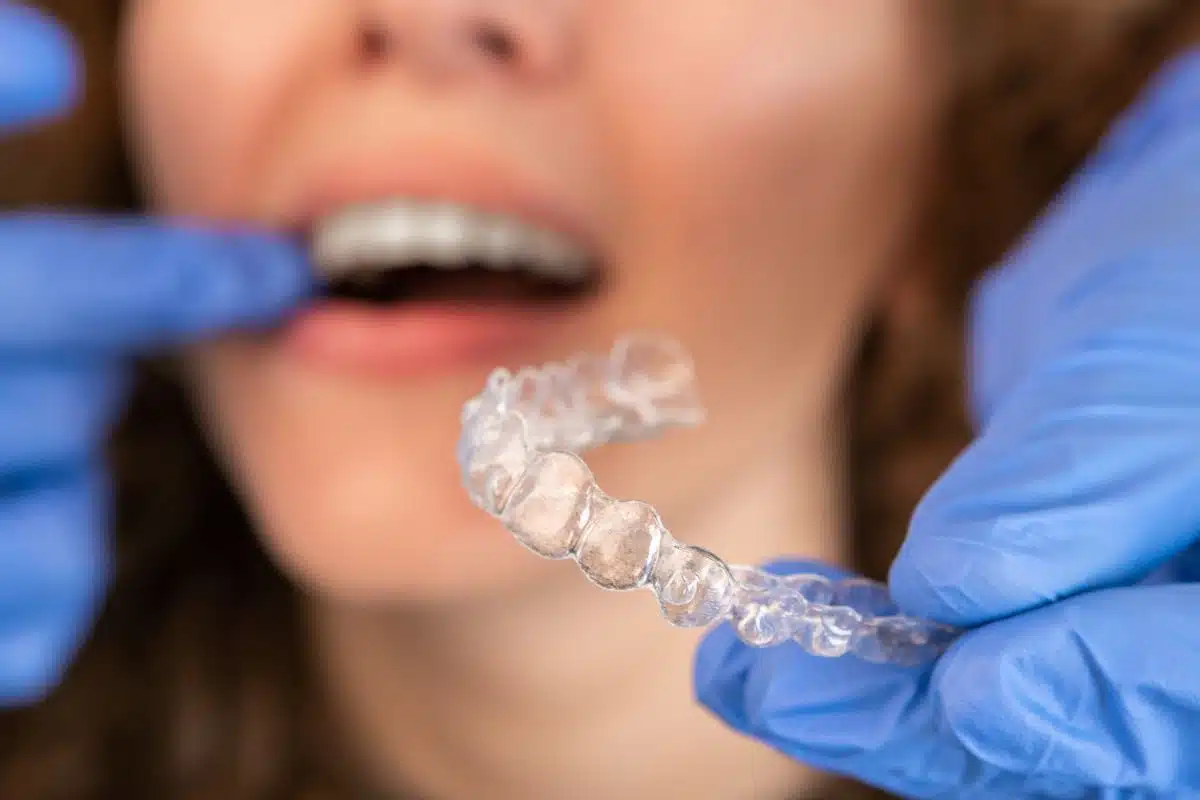
Most people think of Invisalign as a way to straighten crooked teeth, but what about more complex bite problems?
One of the most common bite issues is a deep bite. Deep bites don’t just affect the look of your smile, they can cause jaw discomfort, uneven wear on your teeth, and even make eating or speaking feel uncomfortable.
In this post, we’ll explain what a deep bite is, how Invisalign works to correct it, and whether it might be the right choice for your smile.
What Is a Deep Bite?
A deep bite (also called an overbite) happens when the upper front teeth overlap too far over the lower front teeth. In more severe cases, the lower teeth can even bite into the roof of the mouth.
Some people are born with this bite pattern, while others develop it over time from habits like clenching, grinding, or thumb sucking. Left untreated, a deep bite can lead to:
- Excessive wear on the front teeth
- Jaw joint pain or tension
- Speech difficulties
- A shorter or collapsed appearance in the lower face
Can Invisalign Fix a Deep Bite?
Yes, Invisalign can fix a deep bite. The clear aligner technology like Invisalign is now capable of treating more complex bite issues than it could in the past. This includes many cases of deep overbite.
By applying controlled pressure, Invisalign aligners can gradually move the teeth into better alignment and improve how the upper and lower jaws fit together, often without the need for brackets or wires.
How Invisalign Works to Correct Deep Bites
Invisalign aligners don’t just straighten teeth, they can shift your entire bite into a better position. Here’s how they help with deep bite correction:
1. Intruding Front Teeth
Invisalign can slowly move the upper front teeth upward, reducing the amount they overlap the lower teeth.
2. Extruding Back Teeth
Sometimes, we’ll use Invisalign to slightly raise the back teeth, which helps “open up” the bite and reduce that deep overlap.
3. Correcting Tooth Angles
Aligners also help adjust the angle of your front teeth, so they don’t tilt too far forward or back, bringing everything into better alignment.
4. Using Attachments for Precision
Tiny, tooth-colored attachments may be placed on some teeth to help the aligners guide them more effectively. These allow for more complex movements, which is especially useful in deep bite cases.
What Results Can You Expect?
Every smile is different, but here are some common improvements that Invisalign patients see after deep bite correction:
- Less strain on the jaw
- A more even, comfortable bite
- Reduced tooth wear
- Improved facial balance, especially around the mouth and chin
- A more confident smile
It’s worth noting that the changes can be both functional and cosmetic. Many people notice their lower face looks more relaxed and balanced after treatment.
Is Invisalign Right for Every Deep Bite?
Not in every case. Invisalign is often effective for mild to moderate deep bites, especially when the issue is primarily related to tooth position rather than jaw structure. However, severe deep bites, particularly those caused by skeletal discrepancies may require other treatment approaches, such as braces or a combination of orthodontic methods.
Choosing the right approach depends on several factors, including the severity of the bite, a patient’s age, and overall dental health. To determine whether Invisalign is the right option, a dentist or orthodontist must perform a thorough evaluation, which includes imaging and bite analysis.
Have a Deep Bite? Consult for Invisalign At Woolaver Orthodontics
If you’ve been told you have a deep bite or you’ve noticed uneven wear, jaw tension, or teeth that seem too overlapped, Invisalign could be a great solution.
At Woolaver Orthodontics, we’ve helped hundreds of patients in Ahwatukee and the Phoenix area correct their bite issues using Invisalign. Contact us today to schedule your appointment. Whether you’re an adult looking for a subtle solution or a teen wanting to avoid braces, we’re here to help you feel confident in your smile and your treatment.
FAQs
1. How long does it take to fix a deep bite with Invisalign?
The timeline can vary depending on the severity of the deep bite and how your teeth respond to treatment. Correcting a deep bite with Invisalign typically takes anywhere from 12 to 24 months. More complex cases, especially those needing extra bite correction, may require more time.
2. Is Invisalign as effective as braces for deep bites?
In many mild to moderate cases, Invisalign can be just as effective as braces for correcting a deep bite. However, for more severe or skeletal deep bites, traditional braces—or a combination of orthodontic treatments—may offer better control over jaw and tooth movements.
3. Will fixing a deep bite with Invisalign change the appearance of my face?
Possibly, but the changes are usually subtle. Deep bite correction can improve facial balance, especially around the mouth and chin. By aligning the teeth and improving jaw function, some patients notice a more relaxed or proportional appearance in their lower face.
4. Are bite problems like deep bites common?
Yes, a deep bite is a common issue in both teens and adults. Many people don’t realize they have one until it causes symptoms like jaw tension, uneven tooth wear, or difficulty chewing. Treating a deep bite not only improves oral health but can also prevent long-term dental complications.
Recent Post
December 18, 2025
Keep Your Aligners Clear, Comfortable, and Effective - A Guide From Woolaver Orthodontics

December 12, 2025
Christmas Foods That Can Damage Braces – Woolaver Orthodontics Explains

December 5, 2025
Smile Transformation with Orthodontics in 2026 – Phoenix Orthodontist Explains
November 26, 2025
How To Protect Your Smile With Orthodontic Treatments During the Holidays?

November 19, 2025
Is Your Braces Feel Tighter in Cold Phoenix Winters?
Categories
Orthodontics (38)
Unable to locate Global Block : 83