
May 12, 2023
Braces
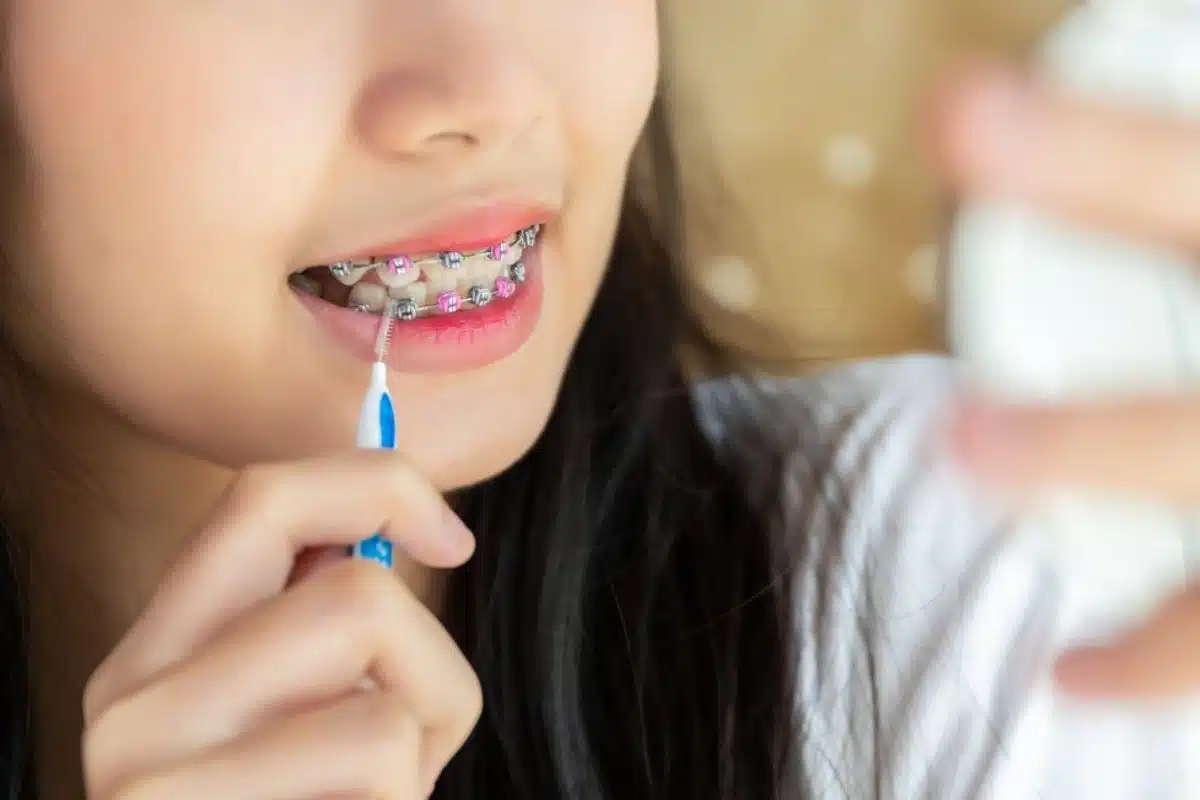
If you have started your orthodontic treatment, you’ve likely noticed that brushing your teeth feels a bit different with braces. With brackets and wires now part of your smile, it’s common to wonder how to effectively clean around them. This common concern is important, as proper oral hygiene is important for a successful treatment and maintaining healthy teeth throughout your braces journey.
In this post, we’ll explain why brushing with braces is so important, when to brush, the best techniques, and what can happen if you don’t keep up with your oral care routine. Woolaver Orthodontics helps you keep your smile clean throughout your orthodontic journey.
Why is it Important to Brush Your Teeth With Braces?
Braces are incredibly effective at moving teeth into their ideal positions, but they also introduce new surfaces and nooks where food particles and plaque can easily get trapped.
The brackets and wires create tiny obstacles, making it harder for your toothbrush bristles to reach every part of your tooth surface, leading to several issues, including: Plaque Buildup, Food Traps.
When Should You Brush Your Teeth With Braces?
At Woolaver Orthodontics, we generally recommend brushing your teeth at least twice a day, once in the morning and once before bed, for a minimum of two minutes each time. Ideally, you should brush your teeth after every meal or snack to remove food particles immediately.
If brushing isn’t possible right after a meal, a thorough rinse with water or mouthwash can help. Brushing before bed prevents damage overnight, and brushing after sugary foods or drinks can help neutralize acids attacking your enamel.
How to Brush Teeth With Braces After Meals?
To effectively clean your teeth and braces, you’ll need the right tools and a specific technique.
- Brushing Outside of Teeth
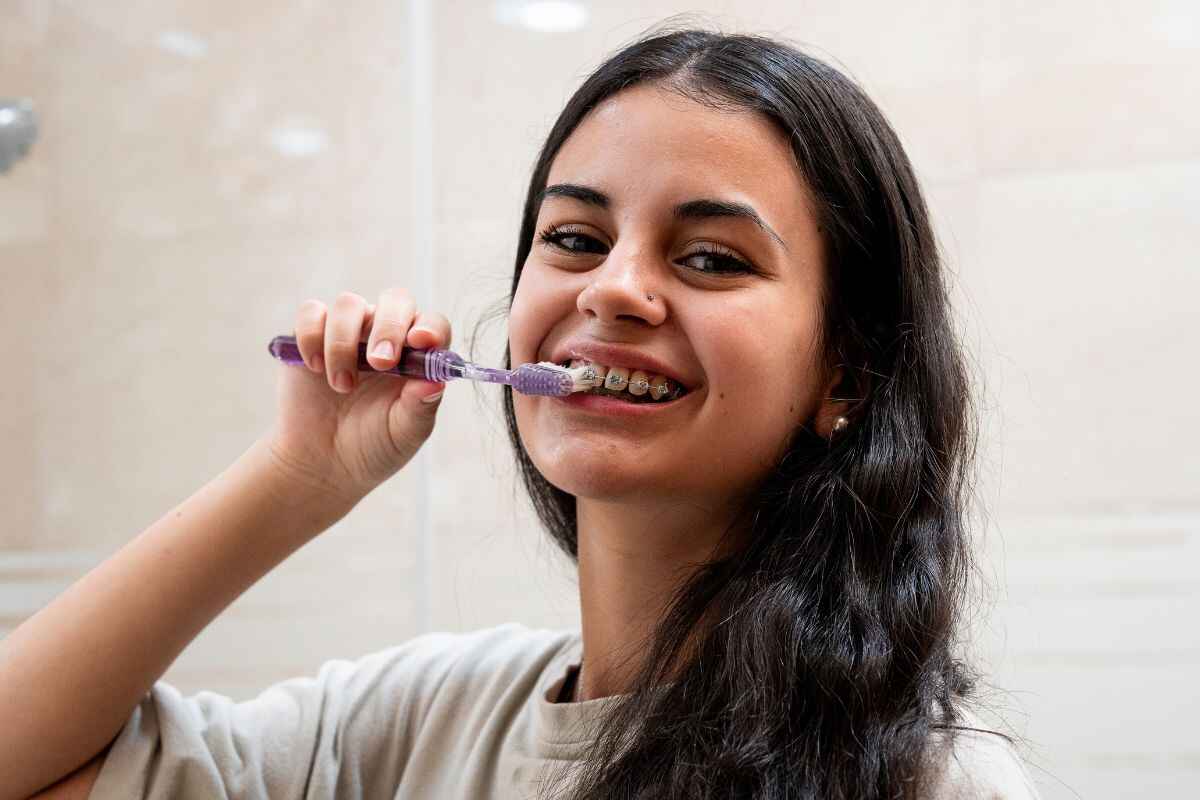
Start by rinsing your mouth to dislodge large food particles. Then, angle your toothbrush downwards to clean above the brackets and the gumline, using gentle circular motions.
Next, angle your brush upwards to clean below the brackets and the gumline with the same gentle, circular motions. Finally, clean directly on the brackets and wires using small, circular motions to ensure all surfaces are clean.
- Brushing Inside of the Teeth
After cleaning around your braces, brush the chewing surfaces and the inside of all your teeth using short strokes or small circular motions.
Use an interdental brush to clean under the archwire and between each bracket, gently removing any remaining food or plaque.
- Complete Your Oral Care Routine With Flossing
Flossing is just as important as brushing. Use a floss threader to guide the floss under your archwire, then floss normally between your teeth, sliding it up and down the sides of each tooth.
Repeat for every tooth. Finish your routine with an antimicrobial mouthwash, swishing it for 30-60 seconds to kill bacteria and rinse away loosened debris.
How often Should You Brush Your Teeth with Braces?
Aim to brush after every meal or snack, or at least three times a day, focusing on a thorough cleaning each time. Flossing should be done at least once daily, preferably before bed, to remove plaque from between teeth and under the archwire.
Importance of Consistency: Skipping brushing or flossing, even for a day, allows plaque to harden and bacteria to thrive, significantly increasing your risk of the problems discussed below. Making oral hygiene a consistent habit will pay off with a healthier, more beautiful smile.
What Happens If You Ignore Brushing with Braces After Meals?
Neglecting your oral hygiene routine while wearing braces can lead to several uncomfortable and potentially damaging issues.
Common Problems:
Cavities (Tooth Decay): Plaque buildup around brackets creates an acidic environment that erodes tooth enamel, leading to cavities.
White Spots (Demineralization): These are early signs of decay, appearing as dull white areas on the tooth surface, often visible after braces are removed. They are caused by demineralization of the enamel due to prolonged plaque accumulation.
Gum Disease (Gingivitis, inflammation, bleeding): Poor hygiene can irritate your gums, causing them to become red, swollen, and bleed easily – a condition known as gingivitis. If left untreated, it can progress to more severe gum disease.
Bad Breath (Halitosis): Trapped food particles and bacteria produce foul-smelling gases, leading to persistent bad breath.
Long-Term Consequences:
Extended treatment time: Dental problems caused by poor hygiene can sometimes delay your orthodontic treatment, as your orthodontist may need to address these issues before continuing with tooth movement.
Compromised final results: If teeth are damaged or gums are unhealthy, the final aesthetic and functional outcome of your braces treatment may be negatively impacted.
Need for additional dental work after braces: You might require fillings, cosmetic treatments for white spots, or gum therapy after your braces are removed, adding time and cost to your overall dental care.
Contact Woolaver Orthodontics for Braces in Ahwatukee, Phoenix, AZ
We are committed to making your braces experience as smooth and successful as possible. Dr. Chris Woolaver and our team are always here to answer your questions and provide the support you need throughout your treatment.
Schedule an appointment online today – we’re your partner in achieving a healthy, radiant smile here in Ahwatukee, Phoenix, AZ. Get the direction to Woolaver Orthodontics in Ahwatukee, Phoenix here.
Recent Post
December 18, 2025
Keep Your Aligners Clear, Comfortable, and Effective - A Guide From Woolaver Orthodontics

December 12, 2025
Christmas Foods That Can Damage Braces – Woolaver Orthodontics Explains

December 5, 2025
Smile Transformation with Orthodontics in 2026 – Phoenix Orthodontist Explains
November 26, 2025
How To Protect Your Smile With Orthodontic Treatments During the Holidays?

November 19, 2025
Is Your Braces Feel Tighter in Cold Phoenix Winters?
Categories
Braces (30)
Unable to locate Global Block : 83